Friday, April 1, 2022

Some thoughts on the Longevity of THE WIZARD OF OZ (1939)

The other day in the film aesthetics class I teach, we watched THE WIZARD OF OZ. Everyone in class had seen it, but no one had seen it since they were children. The viewing made for a fascinating experience.

For one thing, the movie doesn't just hold up well, it possibly holds up better than any movie ever made. If that seems like an outsized claim, consider the following:

1. What other film from the 1930s would a room full of teenagers in 2022 already have seen? (I recently learned that in this same class, about a third of them had never seen the original STAR WARS.) They'd all seen OZ, and they'd all seen it around the same age, between 5-10 years old. 

2. Because it's a kids movie, it doesn't really age. The reason that most movies from the 1930s or 40s have trouble connecting with modern audiences is they're time capsules of old attitudes and styles. (I've found some of my students to be resistant to the pre-Method style of movie acting, as well as black and white cinematography.) THE WIZARD OF OZ, though, was created to be a live action cartoon, a storybook come to life. It's artificial from start to finish, with a mythic context. The acting, music, dancing, art direction--it's all integrated and pitched at the same level of unreality. This separates it, even from most kids movies of its time, which tried to at least wink at the parents or teens in the audience. Not OZ. It knows who it's for: kids. The irony is that, because we were all kids--because we wanted to run away from home at some point, and then wanted to return, and because we were scared of adults, and loved our pets, and because we felt misunderstood--it's for all of us.

3. Look, I'm a Judy Garland obsessive, so of course I'm going to say it's all because of Judy, but it's impossible to imagine anyone else doing what she does in this film. She's a teenager playing a little girl (which, like everything else, adds to the movie's air of otherworldly weirdness). She's plucky without being annoying, scared of evil witches and flying monkeys but always able to rise up and defend herself and her friends. And, of course, she's the greatest musical comedy performer in movie history. That helps, too. 

MGM originally wanted Shirley Temple as Dorothy, but Temple, though talented and adorable, was an actual child and would have grounded the movie in a reality at odds with its aesthetic. And while she could sing, she sang, well, like a kid. She would have been, in a word, cute. Judy isn't cute in OZ, she's touching, and that's the difference.

4. That brings us to "Somewhere Over the Rainbow." Famously, the scene of Judy singing her signature song was almost cut for fear that the Kansas opening was too long. But it is, of course, the heart of the movie. The song, melodic and simple, and imbues the movie with a strange sense of melancholy. The more you know of Judy's life, of course, the more meaning the song has. 

5. The level of craftsmanship here is exemplary across the board. The makeup and costumes of the Wicked Witch, the Scarecrow, the Tin Man, and the Cowardly Lion are still impeccable. The Technicolor still pops. The sets by Cedric Gibbons still enchant. It's all great. 

I'm tempted to say that THE WIZARD OF OZ is a perfect movie, but I can't because I hate the Lion's song "If I Were King of the Forest." It slows us down right when we want to get to the Wizard himself, and the song itself is a dud, a three-minute slog through Bert Lahr's mugging. 

That one quibble aside, though, OZ really is pretty close to a perfect creation. It shows the studio system operating at its zenith, all the parts working in concert to create a masterpiece, one of the true works of cinematic art.        


Tuesday, March 22, 2022

Orson Welles On Stage


If Orson Welles had never made a single film or spoke a single word over the radio, he'd still be a legend: a legend of the theater. His accomplishments in this realm are as fascinating as anything he did elsewhere. There have been books written about his theater work, most notably Richard France's THE THEATER OF ORSON WELLES, which covers Welles's theatrical activity from 1931 to 1940, but I really hope someone somewhere is laboring on a magisterial deep dive into his entire career in theater. Although he shifted his focus to filmmaking in 1940, he dipped in and out of the theater for years, and his work, from start to finish, makes for absorbing reading.

Here are some highlights of his theater work:

1. Childhood productions: Welles made his first brief appearance on stage in a Chicago Opera production of MADAME BUTTERFLY when he was about 3 years old, and in some respects he never looked back. At ten years old he adapted and played the title roles in DR. JEKYLL AND MR. HYDE for a state park production in Wisconsin, followed by a turn as Scrooge in A CHRISTMAS CAROL. After his mother's death, he was sent to Todd's School for Boys in Woodstock, Illinois, where he more or less took over the theater department. He adapted, directed and acted in productions of Shakespeare and George Bernard Shaw, as well as performing in some musical theater composed by his friend and headmaster, Roger Hill.

2. Dublin: After graduating from high school at 16 (shortly after his father's death), Welles skipped college and headed to Ireland instead where he talked his way into the Gate Theater run by Hilton Edwards and Micheal MacLiammoir. There his professional career began with a role in JEW SUSS, an adaptation of a Lion Feuchtwanger novel by playwright Ashley Dukes. Welles did more work at the Gate (including a turn as The Ghost in a legendary production of HAMLET), but he also branched out to take roles at other theater companies (like the Abbey Theater and the Peacock) and mount some productions of his own around Dublin, including productions of Lewis Carroll, Ibsen, Chekov, Eugene O'Neill, P.G. Wodehouse, and, of course, some more Shakespeare.

3. New York: After returning to America and mounting some productions at his alma mater (a period which I'll skip here, but which is fascinating all on its own), Welles headed to New York to try to sell some plays he'd written. Success as a playwright never came but he landed roles as an actor, first as Tybalt in ROMEO AND JULIET for Katharine Cornell's rep company, and then a breakout role in playwright Archibald MacLeish's PANIC. The play only ran a few performances but it got Welles noticed, not least of all by producer John Houseman, who recognized the young man's talent and ambition.

4. The Federal Theater Project: The first project Welles and Houseman launched was the all-Black cast "Voodoo MACBETH" set in Haiti. The production was a landmark success, and the crown jewel in the Federal Theater Project run by Hallie Flanagan (a part of the New Deal's WPA). Welles followed it with an adaptation of a French farce which he titled HORSE EATS HAT, a smash hit comedy which he regarded as some of his best work as a writer and director. Then he issued a dramatic turn as the title character in DOCTOR FAUSTUS, another success that also lifted his profile as an actor as well as a director. Welles and Houseman had a falling out with the WPA over their next production, the radical agitprop musical THE CRADLE WILL ROCK. When they were barred from the theater (locked out with an actual chain fastened to the doors), Welles, Houseman and their actors led the audience twenty blocks up Manhattan to another theater. Forbidden by labor laws to take the stage, they sat in the audience and performed the musical from their seats while the composer Mark Blitzstein played piano, an act of defiance that became the stuff of legend.

5. The Mercury Theater: With their association with the FTP at an end, Welles and Houseman started their own theater, The Mercury. Their first play, which Welles adapted, directed and starred in, was the anti-fascist CAESAR, a resounding commercial and critical success that might well be the most important production of Shakespeare ever done on the American stage. Stylistically daring, emotionally resonant, and unapologetically political, it would influence countless Shakespeare adaptations to come. Orson Welles was barely 23 years old. 

The Mercury followed CAESAR with another comedy in the mold of HORSE EATS HAT, this time a racy production of Thomas Dekker's THE SHOEMAKER'S HOLIDAY. The show was a smash hit, but it would also be the highwater mark for the theater. The troubled productions that followed--Shaw's HEARTBREAK HOUSE, TOO MUCH JOHNSON (for which Welles shot some footage intended to be shown within the context of the play) and the German drama DANTON'S DEATH, failed to catch on with audiences or critics.

Two important productions remained, however. Welles directed Richard Wright's adaptation of his own novel NATIVE SON for Broadway, a landmark of African American theater. The play was a critical and commercial success, and, along with his other left leaning works, would contribute to the FBI labeling Welles a Communist in later years. His other important production was FIVE KINGS, Welles's first attempt to do the story of Shakespeare's Falstaff, a story culled from several different plays featuring the character. The production was not a success, but it laid the groundwork for a masterpiece to come.

Welles and Houseman split up after NATIVE SON and went their separate ways, and spent the rest of their lives shitting on each other in interviews. Still, Welles kept the Mercury going (mostly in name) for a few more years, but he really needed a producer to watch the bottom line. What drove the nail into the Mercury Theater's coffin was the epic disaster of Welles's 1946 AROUND THE WORLD IN 80 DAYS, which featured music by Cole Porter and boasted enormous, costly sets. The production bombed with audiences and was savaged by critics. It also rendered Welles all but unemployable in New York theater.

6. Europe: By the 1950s, Welles was concentrating primarily on independent moviemaking, but he kept working in theater off and on over the next ten years. He did OTHELLO in New Castle and London as prep for making a movie of the play (he'd done the same thing on stage in Utah in 1947 while working on his film version of MACBETH), he did a one-man show AN EVENING WITH ORSON WELLES in Germany, and in Paris he directed THE LADY IN THE ICE, a ballet, for which he wrote the libretto. 

After a brief disappointing return to New York for short lived production of KING LEAR, he produced one of the most fascinating works in his oeuvre, MOBY DICK REHEARSED a meta play he wrote, directed, and starred in at the Duke of York's Theater in London in 1955. With minimal sets and props, the play begins with actors hanging out, talking, joking, complaining, and then gradually morphs into a rehearsal of a play of Melville's story, before morphing into the the story of Ahab and the White Whale itself. 

In 1960, Welles mounted a production of CHIMES AT MIDNIGHT in Dublin with his old Gate Theater pal Hilton Edwards producing. The play was the next evolution of Welles's Falstaff project, which he'd tried with FIVE KINGS back at the Mercury, and which he'd been working on, in some form or fashion, since he was a boy in Woodstock, Illinois. The play helped him clarify his ideas for the story and it also helped him find the final piece of the puzzle, the actor who would play Prince Hal to Welles's Falstaff, Keith Baxter. Five years later, Welles and Baxter brought the play to the screen with the movie FALSTAFF, which many Welles fanatics, including your humble correspondent, consider his finest film.

Welles could have hung it up after CHIMES AT MIDNIGHT, but he directed a final play, 1960's surrealist headscratcher RHINOCEROS, starring Laurence Olivier. Welles and Olivier clashed during rehearsals, and enough drama ensued that forty years later, in 2000, the Steppenwolf Theater mounted ORSON'S SHADOW, Austin Pendleton’s play about the chaotic production.

Happily, though, RHINOCEROS was a hit with both audiences and critics, and it sent Welles's career in theater out on a high note. Though he lived another 25 years, and though there were still cinematic masterpieces like FALSTAFF and F FOR FAKE still to come, he never worked in the theater again.

But, god, what a run. From his childhood, well into his middle years, Orson Welles was one of the theater's great interpreters and innovators. I hope someone out there will give us the book that this part of his career deserves.


Sunday, February 20, 2022

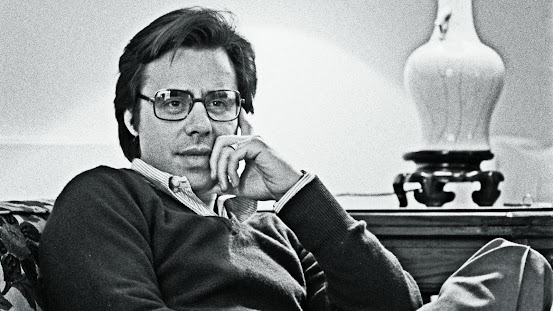
It Was Always Personal: A Brief Appreciation of Peter Bogdanovich


Last month, on January 6th, Peter Bogdanovich passed away. He was 82 years old, which is a nice long run, but it still seems like he was taken too soon. If you listen to almost any interview he gave over the last couple of years you'll hear him talk about the movies he still wanted to make, particularly a ghost story he wanted to film about a movie director haunted by his lost loves. 

One doesn't have to dig too deeply into that plot to find the spirit of Bogdanovich himself. He was among the most personal of filmmakers, not because his life details are reflected in most of the stories he filmed (his most famous film, for example, was about growing up in Texas, an experience far removed from the life experience of a New York kid like Bogdanovich). No, his movies were personal because of his experience of making them. Like his hero and sometimes-friend Orson Welles, Bogdanovich put his passion for filmmaking onscreen. The filmmakers who most revere Bogdanovich himself--Quentin Tarantino, Wes Anderson, Noah Baumbach--all resemble him in this respect: the passion for the medium is the de facto subject of their work. 

With Bogdanovich, of course, this stretched into his other job, that of film historian, writer, and critic. He didn't like being called a critic, and it's true that he only very occasionally functioned as one. He preferred the term "popularizer" which does seem more fitting. He rarely wrote, or even spoke on the record, about films or filmmakers he didn't like. He had a wealth of knowledge about old Hollywood, but his knowledge was idiosyncratic. He knew many of his favorite directors--Ford, Hawks, Renoir, Hitchcock, Ulmer--so he had opinions and stories about them to spare. But what about someone like Billy Wilder? Indisputably one of the great directors, Wilder and Bogdanovich had some bad blood back in the 70s, so there's barely a mention of him in any of the volumes of work Bogdanovich published on classic Hollywood. Likewise, Bogdanovich always had to be forced to say anything at all about any of his contemporaries (even ones like Francis Ford Coppola or William Friedkin with whom he had a short-lived production company). He wrote about what (and who) he liked, and pretty much ignored the rest. It was always personal with Peter Bogdanovich.

Likewise, his focus (obsession really) on directors and stars pretty much eclipsed his interest in any other area of filmmaking. Writers, cinematographers, art directors, producers (especially producers) get short shrift in his books and articles, and rarely got much mention when he was discussing his own films. The "Invisible Woman" season of the podcast YOU MUST REMEMBER THIS focusing on Bogdanovich's ex wife-and-collaborator Polly Platt is a nice corrective to the director-centric view of filmmaking that defined Bogdanovich's film histories and his interviews about his own films.

Having said all that, Bogdanovich was an auteur's auteur. The interviews he did with Welles in the book THIS IS ORSON WELLES is a primary text for any appreciation for Welles, and his interviews with classic directors in his book WHO THE HELL MADE IT? is invaluable. (One example, he conducted what might very well be the only surviving interview with DETOUR director Edgar G. Ulmer.) As a filmmaker, he was frequently brilliant, and always himself. His movies are stamped with his wit, his humanity, his passion for film, and his sensitivity to both love and the loss of love. 

I hope the next year or so will bring retrospectives of his work. We need PAPER MOON, WHAT'S UP DOC?, SAINT JACK, THE LAST PICTURE SHOW, and THEY ALL LAUGHED back in theaters. I'd love the chance to see something like AT LONG LAST LOVE on the big screen, and I've always had a warm place for his expertly wrought version of NOISES OFF. Bring it all back, you art house cinemas, and let us sit in the dark and enjoy the work of one of the greats.  

Tuesday, January 11, 2022

At the Movies in 2022


A running list of what I've seen on the big screen this year:

1. Nightmare Alley (2021)- Landmark Century Cinema

2. In Cold Blood (1967)- Music Box Theater

3. The Tragedy of Macbeth (2021)- Music Box Theater 

4. Lawrence of Arabia (1962)- Pickwick Theater

5. The Apartment (1960)- Music Box Theater

6. Scream (2022)- Logan Theater

7. The Scary of Sixty-First (2021)- Music Box Theater

8. Hiroshima, Mon Amour (1959)- Doc Films

9. The Conversation (1974)- Music Box Theater

10. Hud (1963)- Music Box Theater

11. Out of the Blue (1980)- Music Box Theater

12. Sundown (2022)- Gene Siskel Film Center

13. Strawberry Mansion (2022)- Music Box Theater

14. The Batman (2022)- Regal City North

15. Air Mail (1932)- North Eastern Illinois University (CFS)

16. The Sting (1973)- Pickwick Theater

17. X (2022)- Logan Theater

18. Everything Everywhere All At Once (2022)- Landmark Century Cinema

19. Bigger Than Life (1956)-Music Box Theater (CFS)

20. Mask (1985)- Music Box Theater

21. Desire and Hell at the Sunset Motel (1991)-Music Box Theater

22. Lost Highway (1997)-Music Box Theater

23. The Outfit (2022)-The Quad Cinema (New York)

24. The Lady From Shanghai (1947)- Music Box Theater 

25. We’re All Going to the World’s Fair (2021)- Music Box Theater

26. The African Queen (1951)- Pickwick Theater

27. The Rocky Horror Picture Show (1975)- Music Box Theater

28. The Northman (2022)- Logan Theater

29. 28 Days Later (2002)-Music Box 

30. Pontypool (2008)- Music Box

31. Unforgiven (1992)- Music Box

32. Inland Empire (2006)- Music Box

33. Marcel the Shell with Shoes on (2022)- Music Box

34. Doc (1971)- Music Box

35. Doctor Strange in the Multiverse of Madness (2022)- Regal City North

36. Light Sleeper (1992)- Doc Films

37. Top Gun: Maverick (2022)- Logan Theater

38. Crimes of the Future (2022)- Music Box

39. Sudden Fear (1952)- Northeastern Illinois University (CFS)

40. A Star is Born (1954)- Gene Siskel Film Center

41. Wallace & Gromit: The Curse of the Were-Rabbit (2005)- Music Box

42. Nope (2022)- Logan Theater

43. Mad God (2022)- Music Box

44. Resurrection (2022)- Music Box

45. Seconds (1966)- Doc Films

46. The Cameraman (1928)- Music Box

47. The Marriage Circle (1924)- Music Box

48. Roy’s World: Barry Gifford’s Chicago (2022)- Music Box 

49. Bullet Train (2022)- Regal Webster Place

50. Ratatouille (2007)- Music Box

51. Friday the 13th Part III in 3D (1982)- Music Box

52. Thief (1981)- Music Box Noir City Chicago (NCC)

53. Flesh and Bone (1993)- Music Box NCC

54. Among the Living (1941)- Music Box NCC

55. Street of Chance (1942)- Music Box NCC

56. Smooth as Silk (1946)- Music Box NCC

57. So Dark the Night (1946)- Music Box NCC 

58. Sorry, Wrong Number (1948)- Music Box NCC

59. Playgirl (1954)- Music Box NCC

60. The Cruel Tower (1956)- Music Box NCC

61. Stand By Me (1986)- Music Box

62. Rio Bravo (1959)- Pickwick Theater

63. Within Our Gates (1920)- Music Box (CFS)

64. White Line Fever (1975)- NEIU (CFS)

65. Henry: Portrait of a Serial Killer (1986)- Facets

66. Stir of Echoes (1999)- Facets

67. Cat People (1942)- Facets

68. Cemetery Man (1994)- Music Box

69. Tar (2022)- Music Box

70. Personal Shopper (2016)- Facets

71. Demonlover (2002)- Facets

72. House of Wax (1953)- Pickwick Theater

73. The Maltese Falcon (1941)- Logan Theater

74. The Wind (1928)- Music Box

75. Malcolm X (1992)- Music Box

76. The Cabinet of Dr Caligari- Pickwick Theater

77. Black Panther: Wakanda Forever (2022)-AMC Fiesta Square Fayetteville AR

78. Silent Night Deadly Night (1984)-Facets

79. 36.15 code Pere Noel (1989)- Facets

80. The Beyond (1981)- Music Box

81. Eyes Wide Shut (1999)- Music Box

82. Blast of Silence (1961)- Facets

83. Santa’s Slay (2005)- Music Box

84. The Children (2008)- Music Box

85. Babylon (2022)- Regal City North

Sunday, January 2, 2022

Consider The Cab Driver


 The new issue of NOIR CITY features my overview of the surprisingly rich history of the cab driver in noir, from 99 RIVER STREET and JOHNNY EAGER to TAXI DRIVER and COLLATERAL. Get the magazine here

Monday, December 27, 2021

At the Movies In 2021


As theaters reopened, I got to return to seeing movies at something approaching my old pace. The year started out with trips to the drive-in, and then the occasional special showing at the Music Box. Slowly, weekend matinees and regular screenings have returned. No one knows what the future holds, of course, even in the short term, but here's hoping I get to spend even more time at the movies in 2022.

Here's a list of what I saw on the big screen in 2021:

1. Jaws (1975)- ChiTown Drive-In

2. Night of Kings (2021)- Music Box Theater

3. The Human Voice (2021)- Music Box

4. Woman on the Verge of a Nervous Breakdown (1988)- Music Box

5. Heat (1995)- Music Box

6. Ocean's 11 (2001)- Music Box

7. Rififi (1955)- Music Box

8. The Story of a Three Day Pass (1967)- Music Box

9. The Navigator (1924)-Pickwick Theater (Park Ridge)

10. The Lucky Dog (1921)- Pickwick

11. Shoulder Arms (1919)- Pickwick

12. Playtime (1967)- Music Box

13. The Amusement Park (1973)- Music Box

14. Jerry Maguire (1996)- Regal City North

15. A Quiet Place Part II (2021)- Regal

16. Summer of 85 (2021)- Music Box

17. Mama Weed (2021)- Music Box

18. Stillwater (2021)- AMC River East

19. The Return of Boston Blackie (1927)- City News Cafe

20. Black Widow (2021)- Logan Theater

21. The Green Knight (2021)-Music Box

22. The Suicide Squad (2021)-Logan Theater

23. La Piscine (1969)- Music Box

24. The Third Man (1949)- Music Box

25. Le Cercle Rouge (1970)- Music Box

26. Touchez pas au grisbi (1954)- Music Box

27. Shang-Chi and the Legend of the 10 Rings (2021)-Logan Theater

28. A Foreign Affair (1948)- Music Box

29. Greed (1924)- Music Box

30. A Corner in Wheat (1909)- Music Box

31. Dimland (2021)- Music Box

32. The Card Counter (2021)- Landmark Century Centre Cinema

33. The Last of the Mohicans (1992)- Music Box

34. Titane (2021)- Music Box

35. The Shakedown (1929)- Music Box 

36. In a Lonely Place (1950)- Doc Films

37. Dune (2021)- Regal IMAX

38. No Time to Die (2021)- Regal IMAX

39. The Magnificent Seven (1960)- Pickwick

40. The French Dispatch (2021)- Logan

41. The Power of the Dog (2021)- Music Box

42. Planes, Trains, and Automobiles (1987)- Logan

43. Suicide Club (2001)- Music Box

44. White Heat (1949)-Music Box "Noirvember"

45. Too Late For Tears (1949)-Music Box "Noirvember"

46. Arrebato (1979)- Music Box

47. Pavement Butterfly (1929)- Music Box

48. It's a Wonderful Life (1946)- Music Box

49. Meet Me in St. Louis (1944)- Music Box

50. Superman: The Movie (1978)- Pickwick

51. Hardcore (1978)- Los Feliz Theater (Los Angeles)

52. Licorice Pizza (2021)- Logan

53. Cure (1997)-Music Box

54. Spider-Man: No Way Home (2021)-Logan