Showing posts with label Peter Bogdanovich. Show all posts

Sunday, February 20, 2022

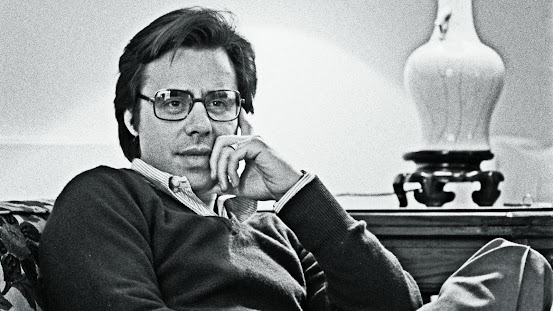
It Was Always Personal: A Brief Appreciation of Peter Bogdanovich


Last month, on January 6th, Peter Bogdanovich passed away. He was 82 years old, which is a nice long run, but it still seems like he was taken too soon. If you listen to almost any interview he gave over the last couple of years you'll hear him talk about the movies he still wanted to make, particularly a ghost story he wanted to film about a movie director haunted by his lost loves. 

One doesn't have to dig too deeply into that plot to find the spirit of Bogdanovich himself. He was among the most personal of filmmakers, not because his life details are reflected in most of the stories he filmed (his most famous film, for example, was about growing up in Texas, an experience far removed from the life experience of a New York kid like Bogdanovich). No, his movies were personal because of his experience of making them. Like his hero and sometimes-friend Orson Welles, Bogdanovich put his passion for filmmaking onscreen. The filmmakers who most revere Bogdanovich himself--Quentin Tarantino, Wes Anderson, Noah Baumbach--all resemble him in this respect: the passion for the medium is the de facto subject of their work. 

With Bogdanovich, of course, this stretched into his other job, that of film historian, writer, and critic. He didn't like being called a critic, and it's true that he only very occasionally functioned as one. He preferred the term "popularizer" which does seem more fitting. He rarely wrote, or even spoke on the record, about films or filmmakers he didn't like. He had a wealth of knowledge about old Hollywood, but his knowledge was idiosyncratic. He knew many of his favorite directors--Ford, Hawks, Renoir, Hitchcock, Ulmer--so he had opinions and stories about them to spare. But what about someone like Billy Wilder? Indisputably one of the great directors, Wilder and Bogdanovich had some bad blood back in the 70s, so there's barely a mention of him in any of the volumes of work Bogdanovich published on classic Hollywood. Likewise, Bogdanovich always had to be forced to say anything at all about any of his contemporaries (even ones like Francis Ford Coppola or William Friedkin with whom he had a short-lived production company). He wrote about what (and who) he liked, and pretty much ignored the rest. It was always personal with Peter Bogdanovich.

Likewise, his focus (obsession really) on directors and stars pretty much eclipsed his interest in any other area of filmmaking. Writers, cinematographers, art directors, producers (especially producers) get short shrift in his books and articles, and rarely got much mention when he was discussing his own films. The "Invisible Woman" season of the podcast YOU MUST REMEMBER THIS focusing on Bogdanovich's ex wife-and-collaborator Polly Platt is a nice corrective to the director-centric view of filmmaking that defined Bogdanovich's film histories and his interviews about his own films.

Having said all that, Bogdanovich was an auteur's auteur. The interviews he did with Welles in the book THIS IS ORSON WELLES is a primary text for any appreciation for Welles, and his interviews with classic directors in his book WHO THE HELL MADE IT? is invaluable. (One example, he conducted what might very well be the only surviving interview with DETOUR director Edgar G. Ulmer.) As a filmmaker, he was frequently brilliant, and always himself. His movies are stamped with his wit, his humanity, his passion for film, and his sensitivity to both love and the loss of love. 

I hope the next year or so will bring retrospectives of his work. We need PAPER MOON, WHAT'S UP DOC?, SAINT JACK, THE LAST PICTURE SHOW, and THEY ALL LAUGHED back in theaters. I'd love the chance to see something like AT LONG LAST LOVE on the big screen, and I've always had a warm place for his expertly wrought version of NOISES OFF. Bring it all back, you art house cinemas, and let us sit in the dark and enjoy the work of one of the greats.  

Sunday, October 21, 2018

THE OTHER SIDE OF THE WIND: A Preliminary Report


It hardly seems possible that I'm about to write these words, but here I go. I just saw THE OTHER SIDE OF THE WIND. Like most Orson Welles fanatics of a certain age I've been waiting many years to see this movie. I first read about it in the early '90s, when it was more or less considered a long lost film. Gradually the narrative around it changed. Whispers were heard of heroic financiers who were going to swoop in and finally sort out all the tangled strings attached to the movie (i.e. someone with deep enough pockets was going to pay off all the people who had--or claimed to have--a piece of it). Then things would fall through. Finally, after decades--yes, decades--of effort by people like Frank Marshall, Peter Bogdanovich, and (most nobly) the film's late cinematographer Gary Graver something did happen. Netflix reached down into its big pockets and paid everyone off and bankrolled the post-production on the film. Now the film exists and will come to theaters and Netflix in early November.

I saw the film this afternoon at the Chicago International Film Festival. I'm still staggered by it.

Everyone will want to know if it's good or bad. That's how the average person appraises a movie, which is fair. The funny thing, of course, is that Welles rarely made movies that fit into easy categories. So to talk about, or really just to begin to talk about it, I should say a couple of things. One, Orson Welles died before he could finish editing this film. (Since he died almost ten years after wrapping principal photography, that should tell you something about the pace of his editing and the tortured circumstances of his film-making process in the 70s and 80s.) So, beware anyone who talks about this movie without first acknowledging that it is not simply a recovered Orson Welles film. It is a film written and directed by Orson Welles but completed by other people. That's important. Welles did not have, as if were, final cut of this movie. This in no way denigrates the admirable efforts of the people who finished the film, it's simply to acknowledge the reality. The other thing to say is that THE OTHER SIDE OF THE WIND is a 70s art film. I wonder what the Netflix audiences will think of it. I frankly doubt that most people who start it on Netflix will finish watching it.

The film tells the story of the last day in the life of a film director named Jake Hannaford (John Huston). He's surrounded by sycophants, cinephiles, disciples, yes-men, skeptical reporters, would-be starlets and pissed off producers. 

The action swirls. I use that word advisedly because THE OTHER SIDE OF THE WIND is the culmination of the whirlpooling mise en scene that Welles honed in films like THE LADY FROM SHANGHAI and THE TRIAL (you see it, in fact, in practically all his films). Characters are always in motion, constantly circling each other as they fire off dialog. This whirlpool movement is married with the rapid-cut editing Welles planned (but, again, never fully achieved) for the film. The result is a propulsive experience.

I want time to process the film, and I'll certainly see it again when it's released in theaters next month. So here's just a few preliminary notes:

1. The film marks the largely unexplored intersection of Orson Welles and 1970s pornography. There's softcore porn vibe to the opening scenes of the film and to the scenes of the film-within-the- film (Hannaford has directed an out of control "arty film" that's mostly notable for being full of sex and nudity). Welles's cinematographer and right-hand man for the last 15 years or so of his career was Gary Graver, a part-time porn director, and we know that in the 70s Welles helped Graver edit at least one hardcore porno (1975's 3A.M.). THE OTHER SIDE OF THE WIND'S interest in sex is part of Welles's expanding sexual interest--at least onscreen--in the 70s. I think we owe this to his partner in life and art, Oja Kodar. The film was cowritten by Kodar, and she's clearly the muse at the center of it. Welles's camera never worshiped a woman like it worships Oja Kodar.

2. Yet the film is largely a dissection of the male ego in all its misogyny, bigotry, and repressed homosexuality-turned-homophobia. It's almost shocking how acidic Welles's take on the main character is, given that he knew Huston's character would be seen as a stand in for himself. He would have fought back against that interpretation, I imagine, but there's too much of Orson in the character to ignore, from his relationship to a Peter Bogdanovich-type character played by, of course, Peter Bogdanovich, to little phrases (like "Always remember that your heart is God's little garden") that Welles himself was fond of.

3. Neither of the actors in the film within the film, Oja Kodar and Robert Ransom, speak a single word. They remain objects--unattainable, sexualized objects--for the director. It is implied that Hannaford kills himself because he cannot have the Ransom character. I suspect that this would have been edgier stuff in 1970 when Welles began working on the picture. I want to see THE OTHER SIDE OF THE WIND again in part because I'm interested to know if Welles is saying anything beyond that. In terms of sex, I'm not sure that he is.

4. But what a film "is saying" is always a pretty nebulous thing, and often a wholly unimportant thing. No one knew that better than Orson Welles. It was Welles, after all, who would tell anyone who asked that "Rosebud" was a cheap trick, a way to tie up the end of CITIZEN KANE. Welles knew better than most that what mattered was the film itself, not the filmmaker, and certainly not the filmmaker's "message."

5. Which brings me to the point that, yes, I'm happy to report that THE OTHER SIDE OF THE WIND  is a good movie. It's stylistically fascinating and often quite funny, with some good performances from Huston and Bogdanovich, and a stand out performance from the underrated director Norman Foster as Hannaford's flunky, Billy. The fact that Foster was often unfairly maligned because of his association with Welles is just one of many, many ways the film overlaps with real life, commenting on it, satirizing it (often perversely), and lamenting it.

Saturday, December 31, 2016

My Year at the Movies: 2016


I go to the movies a lot. I started this blog about eight years ago because I wanted to have a place to think out loud about the movies I was seeing--to reflect on the old and the new, on the good and the bad. I called it the Night Editor because I tend to write late and because I like the 1946 noir NIGHT EDITOR  directed by Henry Levin and starring Janis Carter (an overlooked minor gem, btw). A lot has happened for me in years since I started the blog. I've published several books, been to France twice on book tours, participated in several readings at Noir At The Bar functions, and relocated to Chicago. 

But I've also seen a lot of movies. On the side of this blog I keep a running tally of how many movies I've seen at the theater. I don't know why I do this, except that going to the movies is the closest thing I have to a hobby.

This year I saw 85 movies at the theater. That's a lot, I know, (a movie about every four days), but the true measure of my cinephilic tendencies is that I don't feel like I saw enough. I still managed to miss so many interesting-looking new films and great old classics in rerelease.

I'm not someone who generally laments the state of film. Yes, schlock too often rules the box office. Yes, I worry about the reheated nature of our choices, where it seems that almost everything at the box office is a do-over of some pre-existing property. Yes, the culture is ever more infantilized. Yes, it is harder and harder to get movies made for adults.

And yet...

In some ways, things are better than we give them credit for being (and things in previous days were often worse than we give them credit for being). Here's a list of some good things about the current state of movies.

1. Hollywood has perfected the comic book movie and the sci-fi popcorn movie. A case in point: this year I saw DOCTOR STRANGE. Here's a movie that could only exist at this particular moment, the result of Marvel's mastery of the comic book movie. It has a great cast of capable actors slumming it in a labyrinth of good special effects and efficient storytelling, and the result was an entertaining afternoon at the movies. When they make the inevitable sequel, I'll check it out. Of course, I'm not saying that the Hollywood machine always gets it right. CAPTAIN AMERICA: CIVIL WAR was fun but overstuffed while BATMAN V SUPERMAN: DAWN OF JUSTICE was stupid and sluggish, just to take two high profile examples. But overall I think Hollywood is doing this stuff as well as it can be done. The comic book movie is the modern equivalent of the old time spectacular. Will we look back and call DOCTOR STRANGE a masterpiece? Probably not, but I really do think it will hold up better than AROUND THE WORLD IN 80 DAYS (1956) and that piece of shit won Best Picture...

2. Great stuff still gets made. This year I saw films as different as MOONLIGHT, MANCHESTER BY THE SEA, HAIL CAESAR!, ARRIVAL, CERTAIN WOMEN, and FENCES. If I'd only seen these movies, I still would have been pretty happy at the breadth and accomplishment of the year. Different movies with different tones and intentions, but so much skill and heart.

3. The revival business is going strong. I have to start here by saying that "strong" is a relative term. I'm not trying to suggest that it's 1960s-film-society strong out there, but, when it comes to classic film, I had an incredible year at the movies. Just to name a few: I saw the triumphant restoration of Welles's masterpiece CHIMES AT MIDNIGHT (twice), as well as Bergman's THE SEVENTH SEAL, the Coens' BLOOD SIMPLE and BARTON FINK, Ozu's LATE AUTUMN, Kurosawa's YOJIMBO, von Stroheim's GREED, and Hitchcock's VERTIGO. The movie event of the year for me was the release of Kieslowski's DEKALOG, the ten hours of which comprised my most exciting cinematic experience this year.

I should say a few words about disappointments. In the realm of blockbusters, I think the Star Trek and Bourne franchises are in trouble. STAR TREK BEYOND was more entertaining than its horrible trailer, but the series itself is adrift. And JASON BOURNE feels every bit like a movie that knows it has no reason to exist. On the art side, Terrence Malick was back with KNIGHT OF CUPS, the kind of meandering pose-striking mess someone might make to parody Terrence Malick.

Here's my top ten new releases of the year, in no particular order:

1. MOONLIGHT-A triumph from director/screenwriter Barry Jenkins, this coming of age tale might be the most perfectly achieved new film I saw this year, with vivid camerawork and brilliant acting. Unfolding in three chapters over several years, it creates and maintains an atmosphere of emotional intensity without ever seeming to reach too hard for effect. Devastating and beautiful.  
2. MANCHESTER BY THE SEA-No film I saw this year haunted me as much as this one. Director/screenwriter Kenneth Longeran tells a quietly funny and finely observed story about the ways we live with grief. Casey Affleck is a slow burning flame in the lead role as an emotionally isolated janitor dealing with the death of his older brother, and as his ex-wife Michelle Williams proves once again that she's one of the best actors working. 
3. HAIL, CAESAR!-This movie divided a lot of people, even admirers of the Coen Brothers. All I can say is that it feels like a movie they made just for me, a whacked out comedy about the Hollywood studio system, with singing cowboys, dancing Communists, Jesus-obsessed studio fixers, and a goofball star of biblical epics played by George Clooney in his best comic turn in years.
4. FENCES-A world where Denzel Washington makes adaptations of August Wilson plays is a fine world, indeed. He and Viola Davis do a powerful duet here as a married couple confronting themselves, and each other, for the first time. With exceptional supporting work from Stephen Henderson and Jovan Adepo. There's talk of Washington producing more plays from Wilson's Century Cycle, which goes on the short list of things to be excited about. 
5. CERTAIN WOMEN-An anthology film from director/screenwriter Kelly Reichardt based on the stories of Maile Meloy tells three different tales set in Montana. The first two stories are interesting, but the third story, about the would-be romance between a shy ranch hand (Lily Gladstone) and a young lawyer (Kristen Stewart), is a delicate heartbreaker, among the finest things that Reichardt has done. 
6. ARRIVAL-This was the best sci-fi movie of the year. Sure ROGUE ONE was okay, but in a better world this deeply involving and strikingly achieved film from director Denis Villeneuve would be the one breaking records at the box office.
7. MIDNIGHT SPECIAL-Director/screenwriter Jeff Nichols makes such wonderfully quirky and specific films. This is his most daring to date, a religiously infused bit of sci-fi realism with yet another powerhouse performance from Michael Shannon.
8. WIENER-DOG-Director/screenwriter Todd Solondz is not usually my cup of cinematic tea, but this brutally funny pitch-black comedy hit me where I live. It's grim, unflinching, and hilarious.
9. LA LA LAND-From director/screenwriter Damien Chazelle and composer Justin Hurwitz, this musical comedy is a hell of a lot of fun. Some unfocused storytelling in the middle sections and some vocals-too-low-in-the-mix keep it from being completely successful, but it's carried along by good music and a stellar performance by Emma Stone.
10. NOCTURNAL ANIMALS-The final third of this twisty drama from director/screenwriter Tom Ford (adapting the novel TONY AND SUSAN by Austin Wright) has elements of a conventional (and lesser) thriller, but such is the power of this piece that I don't know what to make of them. I need to see this movie again to unravel the threads of reality and unreality that tie together its main storyline (an art dealer played by Amy Adams is shown a new novel written by her ex-husband) and the story of the novel in which a family man played by Jake Gyllenhaal (who also plays the author of the novel) seeks to avenge the murder of his wife and daughter with the help of a dying detective played by Michael Shannon (in his other great performance of the year).

Other good films I saw this year included the riveting documentary WEINER, the coolly unsettling THE LOBSTER, the effective Blake Lively-versus-Jaws thriller THE SHALLOWS, the fun GHOSTBUSTERS reboot, the happily trashy THE NICE GUYS, the well-acted rural noir HELL OR HIGH WATER and the quirky western IN A VALLEY OF VIOLENCE featuring a wonderful scene-stealing performance from John Travolta as the morally conflicted, and often laugh out loud funny, bad guy.

In addition to those already mentioned, some of the best revival movie experiences I had this year included seeing my beloved PAPER MOON (1973) on the big screen for the first time; discovering Stephanie Rothman's deeply subversive THE STUDENT NURSES (1970) and Peter Fonda's trippy THE HIRED HAND (1971); and revisiting Billy Wilder's hilarious ONE, TWO, THREE (1961), Bogart's final film THE HARDER THEY FALL (1957) and Scorsese's masterpiece TAXI DRIVER (1976). My best discovery at the revival movies was the Nicholas Ray rodeo drama THE LUSTY MEN (1952) which features the best Robert Mitchum performance that most people haven't seen.

All in all, it was a damn good year at the movies. The year ahead looks foreboding in many ways for our politics and our society. We need the movies more than ever, and here's hoping 2017 will find me (and you) in the dark, staring up at the big screen.

Sunday, February 10, 2013

New Bogdanovich Comedy SHE'S FUNNY THAT WAY

As a huge fan of writer-director Peter Bogdanovich, I'm thrilled at the news that his long gestating project SHE'S FUNNY THAT WAY (formerly titled SQUIRREL TO THE NUTS) seems finally to be coming together with a great team behind it. The film is being produced by Wes Anderson and Noah Baumbach, and it will star Owen Wilson, Jennifer Aniston, Olivia Wilde, Brie Larson, Jason Schwartzman, Eugene Levy, Kathryn Hahn, and Cybil Shepherd.

Everything about this makes me happy. Bogdanovich has being doing grunt work in the industry for a couple of decades now, so it's exciting to see him launching a production of an original script (co-written with his ex-wife Louise Stratten) for the first time in a very long while. He's got an impressive cast, and I'm particularly happy to hear that he'll be working with Owen Wilson, who frankly seems to have been born to star in a Bogdanovich movie.

Though he's probably best known today for THE LAST PICTURE SHOW, as well as for his invaluable work as a movie historian (he did, for instance, the only interview with cult director Edgar G. Ulmer that has survived), he really was one of the great comedy directors from the 1970s. As a director, he's got a light touch and a gentle spirit, but never seems to be sappy or maudlin. Here's hoping that everything goes well with SHE'S FUNNY THAT WAY. 

For more on Bogdanovich click below under Labels.  


Friday, October 29, 2010

Daisy Miller (1974)


Peter Bogdanovich's Daisy Miller is an odd mix of two tones that the director usually hits with skillful precision: comedy and bittersweet loss. Based on Henry James's novella of the same name, the film tells the story of an expatriate named Winterbourne who meets a beguiling young American girl traveling Europe with her flighty mother and surly younger brother. A relationship develops between the uptight Winterbourne and the vivacious Daisy, but Daisy quickly becomes the scandal of the American expatriate community and Winterbourne can't quite reconcile himself to the disapproval of people like the rich widow Mrs. Walker.

Henry James is notoriously hard to adapt to the screen because so much of his work takes place below the placid surface of the (in)action of the plot. Bogdanovich bravely waded into these deep waters with his mind set on staying true to the spirit of James. The result is in many ways his least accessible film. It reminds me in some ways of Welles's The Immortal Story, a film of similar somber control. The difference here is that Bogdanovich, a master of comedy, injects this film with a lot of daylight, in both the metaphorical and literal senses.

Most of the comedy comes from the members of the Miller family. Mrs. Miller (Cloris Leechman) is a motor-mouthed set of nervous twitches, while Daisy's little brother (future singer/songwriter James McMurtry) is a grumpy American xenophobe who's none to happy he's stuck in Italy with his big sister and mother.

And then there's Daisy herself, played by Bogdanovich's 70s muse Cybil Shepherd. A viewer's enjoyment of the film hinges in large part on his or her reaction to Shepherd's quirky charisma. Despite her beauty there was always something imbalanced about Cybil Shepherd, a combination of giddy eccentricity on the one hand and fair-haired banality on the other. That probably sounds worse than I mean it, but consider that both of her iconic film roles (in The Last Picture Show and Scorsese's Taxi Driver) position her as a man's unattainable romantic ideal. It's too much to say that she had a mystery about her, but in most of her film roles there's something untouchable about Cybil Shepherd, something a little playful and more than a little mean. More often than not, when she's playing opposite a man, Shepherd seems like a weird little kid pulling the wings off flies. Here, she plays Daisy as a bubbly innocent--or she tries to--but innocence hangs off her like an oddly tailored outfit.

Which may or may not be the point. Daisy and Winterbourne can't seem to ever say what they're feeling. With Winterbourne this makes sense. As played by Barry Brown, he's a man of tight reserve. With his dark, mournful eyes, Brown has no trouble selling us on Winterbourne's morose self-defeat.
(A tragic manic depressive who killed himself just four years after this movie was made, Brown should have been cast as Edgar Allan Poe in a biopic.) But Daisy is tough to figure. There is a scene toward the middle of the film where they dash to make it to a boat, and she turns and looks at him with unbridled joy--a joy she quickly bridles again. It's a terrific moment of acting by Shepherd because it plays off the confusion she usually causes in men: Is she toying with me? Even after the film supplies us with an answer, we're still not sure.

Shepherd is perfect for this role in the sense that you're never entirely sure what she's thinking. Her weakness as an actress, however, has always been that her obliquity doesn't seem to hint at unplumbed depths. She's a shallow actress in the best and worst senses of the word.

Daisy Miller is a fine film in many ways. Its production design is impeccable, and the cinematography by Alberto Spagnoli is often stunning. The supporting cast, particularly Eileen Brennan as the conniving Mrs. Walker, is top rate. Moreover, Bogdanovich shows once again that he is a master of intricate long take (I can't say for sure but I'm willing to bet that this film has fewer cuts than any of his others).

It is a film of surfaces and seems to be the spiritual precursor to Kubrick's Barry Lyndon, Scorsese's The Age of Innocence and Ivory's Remains of the Day--yet Daisy and her goofy family make odd protagonists for such a tale. This goes back to what I was saying at the outset about the mix of tones.

In its day, the film was a notorious flop, suffering in part from the bad press that Bogdanovich and Shepherd's extramarital affair had generated in the tabloids. It ended Bogdanovich's period of skyrocket success, derailing for a time one of the most important directors of his era. Watched today, however, the film is fascinating. I can't bring myself to call it an unalloyed artistic success--but there is something about it. Like Daisy herself, it stays in the mind.

Here's a piece by Peter Tonguette over at Senses of Cinema, a retrospective of Bogdanovich's career with a lot of attention devoted to Daisy Miller.

Friday, September 24, 2010

Bogdanovich Speaks


The final entry in my salute to director Peter Bogdanovich is to link to a fascinating interview that he did with Alex Simon around the time of The Cat's Meow. It's a wide ranging talk--touching on many aspects in the life and career of a man who has experienced, as Simon puts it, "high highs and low lows."

Saturday, September 18, 2010

A Brief Introduction to the Cinema of Peter Bogdanovich


Last week I talked a bit about Peter Bogdanovich's new blog and some of his wonderful writings on film.

I don't want that to obscure his work as a director, though. Bogdanovich was one of the brightest talents of the 1970s, a period of extremely bright talents. For a brief window of a few years, it looked as if there might be no end to his success. One wonders what would have happened if he had been the dominant voice in American film instead of George Lucas; we'd be living in a different world--one with far better movies, I suspect. Bogdanovich was one of the few major directors of that era who wasn't obsessed with violence. While Scorsese, De Palma, Lucas, Coppola, and Spielberg either made violent cartoons or bloody masterpieces, Bogdanovich made comedies and stark dramas. Among American directors of that era (most of them men) he was the one who seemed to like female characters the most, while also being the one most comfortable with the subject of sex. I wish his influence was more keenly felt today.

Here is a brief introduction to the films of Peter Bogdanovich:

Targets (1968)-His first film, made for producer Roger Corman, was a tense thriller starring Boris Karloff as an aging film star who comes face to face with a deranged young killer based on the Texas clocktower shooter Charles Whitman. An amazingly assured debut, smart and suspenseful. A film about violence rather than a violent film.

The Last Picture Show-This quiet drama about the sexual goings-on in a sleepy Texas town was shocking in its day. Hell, it's still shocking. Few American films are so plainspoken about matters of the bedroom. A great cast, anchored by the touching affair between Timothy Bottoms
as a high football player and Cloris Leachman as the lonely wife of a latently gay football coach.

What's Up, Doc?-His biggest moneymaker was this blockbuster comedy starring Barbara Streisand and Ryan O'Neal. It's screwball in the tradition of Bringing Up Baby--a G-rated goofball jamboree. Want to understand why some people love Barbara Streisand? Here's the answer. One of my favorite comedies.

Paper Moon-One of my favorite films of all time. In the middle of the Depression, a con man named Moses Pray (Ryan O'Neal) discovers that one of his ex-girlfriends has died and left behind a ten year old girl named Addie (Tatum O'Neal). He agrees to take the girl to her family in Missouri, but as they travel across the country it turns out the girl has a gift for grift not unlike Moses himself. I am in love with this film. It's charming and funny without being sentimental or cute. Ryan and Tatum O'Neal had, by all accounts, a horrible relationship in real life. In the film, though, the gloom is always lifting, the sun always peaking through dusty skies. The more I see it, the more I love it.

Nickelodeon-Bogdanovich's comedy about the rough-and-tumble early days of moviemaking plays a little like an adaption of his interview book, Who the Devil Made It. His script was cobbled together from stories he'd heard from directors like Leo McCarey, Allan Dwan, Raoul Walsh, and John Ford--all of whom had started out in the primordial pre-Hollywood silent film industry. Cinema during this little-known era was more like gorilla filmmaking than the sleek studio system it would give rise to, and none of his contemporaries could have brought the same passion and knowledge to the subject than Bogdanovich. That said, the film is a minor entry on his resume. There are a lot of laughs here, but the film lacks the precision of some of his other comedies. The shoot was also compromised by the studio's insistence that the film be released in color, but the newest DVD release of the film features the director's preferred black and white version.

Saint Jack-Bogdanovich's fortunes took a sharp turn after the success of Paper Moon. He started getting bad reviews and his films started flopping. Even his personal life got bad press. He scored a critical comeback with this 1979 drama about an American pimp in Singapore starring Ben Gazzara. A pointed criticism of the hypocrisy of American foreign policy in Southeast Asia and another stark look at the emotions, self-justifications, and self-delusions surrounding sex. A great film, criminally overlooked.


They All Laughed-The film that nearly ruined his life. Bogdanovich fell in love with his leading lady, Dorothy Stratten during the making of this comedy co-starring Ben Gazzara, Audrey Hepburn and John Ritter. After she was murdered, the studio wanted to shelve the project, so a distraught Bogdanovich bought the film (!) and tried to release it himself, a move that ruined him financially. While the film holds a special place for the director and has its defenders among people like Wes Anderson and Quinton Tarantino, I've never really warmed it. In short: it's a comedy that doesn't make me laugh. See it yourself to decide. (And click on the title above to watch Wes Anderson interview Bogdanovich about the film)

Mask-I haven't seen this film since about, oh, 1987. Cher, Sam Elliot, and Eric Stoltz as a funny kid with a deformed face. That makes it sound like one of those disease-of-the-week films from the eighties, but my recollection of the film is that it was a genuinely moving, surprisingly funny, piece of work. Bogdanovich was able to release a Director's cut of the film on DVD that reversed some tampering by the studio.

The Cat's Meow-His last feature film to date, this 2001 drama is a fictional meditation on some old Hollywood gossip--the story that William Randolph Hearst supposedly shot and killed a man during a cruise because he thought the fellow was having an affair with Hearst's mistress, Marion Davies. A witty little romp.

Directed By John Ford-In 2006, Bogdanovich updated his 1971 documentary about director John Ford. He included new information and footage (including a private conversation accidentally recorded between Ford and his long lost love Katherine Hepburn). The result is a fascinating look at one of the cinema's pivotal figures.

Sunday, September 12, 2010

Peter Blog-danovich


I've long thought that Peter Bogdanovich was one of the great undervalued men of cinema. I discovered him the way I assume most people do, by the reputation of his second film, the critical and commercial success The Last Picture Show. When he made the film in 1971, he was thrust to the forefront of the film geek generation that briefly held sway in Hollywood following the success of Easy Rider. He had a few more big hits after that and then his career took a sharp turn. His films started flopping. His marriage fell apart because of an affair with his leading lady Cybil Shepherd, and then that relationship fell apart. His relationship with model-turned-actress Dorothy Stratton ended in tragedy when her jealous estranged husband brutally murdered her. Bogdanovich's life fell apart. Financial ruin followed, and it seemed as if he might not recover.

Happily, he put his life back together. He did a lot of work in television, directing TV films and issuing a supporting role on The Sopranos. He's even managed in an increasingly convoluted Hollywood to direct some movies.

Now he's on Indiewire with a new blog called, of course, Blogdanovich. As most fans of his work know, Bogdanovich started out as an actor but first made his name as a writer. He did early books on Allan Dwan, John Ford, and Orson Welles. His Welles book led him into a collaboration with The Great One on the bible of all Wellesians, This Is Orson Welles. His book Who The Devil Made It, a collection of interviews with classic directors is an essential film book. Essential. As in, you must read this book before you call yourself a film geek.

The prospect of Bogdanovich blogging about classic film (issuing short introductions to films like Ball of Fire) is a happy thought. Here's hoping he keeps it up.

Tuesday, September 22, 2009

Directed By John Ford (1971/2006)


I want to begin this look at Peter Bogdanovich's excellent reworking of his 1971 documentary DIRECTED BY JOHN FORD with a grim observation followed by an even more despairing prediction. The observation: John Ford's reputation has been greatly diminished by the passage of time. The prediction: I don't think it's coming back.

One of the interesting oversights of Bogdanovich's fascinating documentary is its failure to deal with the reality that for new generations of filmmakers John Ford is more of a historical footnote than an inspiration. The Western genre--once the unquestionable champ of the box office--is all but washed up, replaced by science fiction. The myth of the American frontier has been replaced by the superhero narrative and the space opera. With the Western goes much of Ford's appeal to new audiences.

Watching DIRECTED BY JOHN FORD you wouldn't know that his reputation, and the future of his work, stands in such peril. Bogdanovich originally made the film in 1971 when a generation of up and coming directors (including Martin Scorsese, Steven Spielberg, and, of course, Bogdanovich himself) considered Ford to be the grand master of American films. The new reworking of the film mixes new interviews with Scorsese, Spielberg, Clint Eastwood, and Walter Hill along with older interviews with John Wayne, Henry Fonda, and Jimmy Stewart.

If that description makes the film sound like a glorified DVD extra (like the excruciatingly fawning "documentary" that accompanied the DVD of THE SEARCHERS) it shouldn't. Bogdanovich has made a real documentary, one of the best I've seen in fact, on the art of directing film. He avoids the usual talking head platitudes and focuses instead on the creation of scenes, such as a riverside dialog scene between Jimmy Stewart and Richard Widmark in TWO RODE TOGETHER. He includes Spielberg's funny anecdote of meeting Ford and receiving a gruff lesson in how to frame a shot. Ford's advice to the young director about where to put the horizon is unromantic, practical, and brilliant.

As good as the material on directing is, the material on Ford the man is just as interesting. Something about Ford that is easily overlooked given his stoic reputation is that he was, in many ways, a very weird guy. He dressed like a bum, walked around chewing a handkerchief, and picked out random people for vicious public humiliations. This film gives you a sense of the man's oddness. And while several Ford biographies over the years have reported an affair between the director and Katherine Hepburn, Bogdanovich provides a remarkable artifact: a piece of audio accidentally recorded between Ford and Hepburn in private during their last meeting. You almost feel wrong listening to something so obviously personal.

Bogdanovich has long been a personal favorite of mine. THE LAST PICTURE SHOW, WHAT'S UP, DOC? and SAINT JACK are three tremendous films, and PAPER MOON is, frankly, one of great joys of my movie-watching life. It's comfort food, a film I can keep going back to, again and again, like TO HAVE AND HAVE NOT, NOTORIOUS, THE TRIAL, or OUT OF THE PAST. Bogdanovich was right to go back and rework his earlier version of DIRECTED BY JOHN FORD--though I wish the two films would come packaged together. We can be happy we have this look at Ford's career.

Which of course brings us back to the man and his movies. One thing Bogdanovich's film makes clear is that Ford was a master of the movie visual. His images pop with vitality, even though he rarely moved his camera unnecessarily. I had always considered Ford a master craftsman, but I didn't really appreciate his direction until I saw STAGECOACH and THE SEARCHERS at the Film Forum in New York a few years ago. You simply have to see Ford's films on the big screen. He was thinking in terms far, far bigger than a television screen. Monument Valley looks pretty on TV, but on the big screen, in THE SEARCHERS, it becomes a barren landscape of mausoleums, the great emptiness swallowing the puny echo of gunshots. Human emotions, so hot and uncontrollable, are ultimately placed into a historical framework that renders them tragic in their uselessness.

So, yes, Ford was a great director, but he was a far more flawed director than Bogdanovich's documentary would seem to indicate. He was an unabashed militarist for one thing, and his films--with some notable exceptions--undeniably glorify combat and war. His treatment of Native peoples is, by and large, pretty terrible. Native Americans in Ford's films come in three varieties a) inhuman targets, b) comic simpletons, or c) noble savages. His one attempt to deal with them as people--CHEYENNE AUTUMN--is a few days late and quite a few dollars short. Moreover, Ford was a sentimentalist. Whitewashing violence and then doting on virginal mother figures, Ford can be, in the worst sense of the word, archaic. After all, it's a good thing that films seldom treat war like a knee-slappin good time anymore. And it's a good thing when films give women more to do than keep the homes fires burning while the boys go out and booze and bond. John Ford was a director of massive, undeniable skill. His eye for composition was impeccable. He gave us moments and movies that should be seen and treasured. But his work is aging, aging faster than the work of Welles or Hitchcock or Hawks, because it has a fidelity to a discredited myth. We've moved on in many ways, leaving much of Ford's life's labors to sit in the sun like the spires of Monument Valley.

***

Directed By John Ford is available on Netflix.

***

Here's a brief clip from the film. I don't know why there are subtitles in the clip. Subtitles don't appear on the DVD version.

***

I've written briefly about Ford and The Searchers before.

***

Here's an overview of Ford's career at Senses Of Cinema. They have have a nice career overview of Bogdanovich as well.